


A note before we start: This piece was reconstructed from oral histories, old Bowling Green Daily News and Tennessean clippings, an obituary, a headstone, a few advertisements, a few photographs, stories told to us and comments on social made to us. The timelines in those sources don’t always match. Where they conflict, I went with what could be cross-referenced. Where I couldn’t verify a detail, I said so. If you knew Henry or Tak, or worked at the House of Wan, or have a story or correction to add, please reach out. The point of this series is to remember the people who built this town. That works better when more of you help write it. Shoot an email to BuyLocalBG@gmail.com.
We don’t talk about Bowling Green’s culinary pioneers enough. The people who opened the first restaurants of their kind in town, who introduced Bowling Green to food it had never seen before, who stayed long enough to become part of the place. Henry and Tak Jong Wan were two of them. The Wans opened The House of Wan in 1974 and ran it for the rest of their lives. Tak was 99 when she passed in 2009. Henry was 94 when he passed in 1994. They are buried together in Morgantown.
But the story of how they got here and what they brought with them is older and stranger than most people in town ever knew.
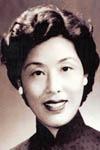
Guangzhou, Canton, and Tokyo
Tak Jong Zhang came into the world on November 15, 1910, in Guangzhou, the capital of Guangdong Province in southern China, and the world she came into was already restless. Her father, Lian Ju Zhang, was a general in the province, which in southern China in 1910 meant something specific and dangerous. The Qing Dynasty had two more years to live. The Cantonese man who would replace it, Sun Yat-sen, and the revolution he had been organizing for two decades was about to find its moment a few hundred miles north. Tak’s first breaths were drawn in a country that would not exist by the time she could walk.
Her mother, Young Lo Cheng, died young, the way mothers did. The stepmother who raised her was by every account passed down a remarkable woman. She made sure Tak was educated, which was not what most Chinese girls of that generation could expect, and not what a daughter of a general might have been steered toward in another household. Tak graduated from the Canton Girls Teacher College, and then at some point in the 1920s or 1930s, she crossed the East China Sea and enrolled in a women’s college in Tokyo. A general’s daughter — alone in Japan — studying. It was not anyone’s standard path.
She met Wood-Chin Henry Wan in Tokyo and somewhere around 1936 they married. The first of their two sons, the boy who would eventually become Dr. Richard T.C. Wan and practice medicine in Butler County for forty-eight years, was born in Tokyo before they returned to China. By then Tak was teaching dance, music and art to Cantonese children. She had taken a job as a librarian in Yao Peng and they were doing what young couples do: building a life.
Most of what they were building they would have to leave.
Two Wars
The war did not arrive in Canton all at once. It arrived in pieces, the way wars do, until one morning in October 1938 the Japanese army was in the streets and the question of what came next had been answered. The full invasion had begun fifteen months earlier in July 1937, the kind of date that shows up in history books with a clean line under it but that a family living through it would have experienced as a slow and then sudden tightening of the world. By the time the Japanese flag flew over Guangzhou, Tak was a wife and a mother with a small boy, husband, household and she would spend the next seven years of her life preparing dinner under occupation.
What occupation meant for any one family depended on who that family was. The Wans had standing. Tak’s father was a general and a general’s daughter in occupied Canton was a person whose name the Japanese might know — a person whose family name carried weight in either direction. That cuts both ways. It meant some doors stayed open that would have closed for others. It also meant there were very good reasons not to be noticed. Somewhere in those years, Tak and Henry had a second son, Alan, the brother of the boy who would one day deliver babies in Butler County. They worked. They cooked. They taught the boys what to say and what not to say. They watched a city they loved exist under a flag that was not its own and they waited for it to end.
It ended in August of 1945 when the Japanese empire surrendered in a bay halfway around the world and the news traveled back to Canton on slow ships and faster radios. For about three months the city was Chinese again, and you can imagine if you have ever been gone from somewhere and then come back to it, what that must have felt like. You can also imagine, if you know anything about how the next thirty years of Chinese history went, that the feeling did not last.
The civil war between Mao Zedong’s Communists and Chiang Kai-shek’s Nationalists had been on simmer since the 1920s, paused only because both sides had a more pressing enemy in the Japanese. With the Japanese gone the pause lifted and by 1947 the war was no longer a contest between equals. By 1948 the Communist victory was a matter of when, not whether, and families with Nationalist ties were running out of clock. A general’s daughter from Guangdong Province qualified and qualified easily.
In 1948 Henry and Tak Wan packed what could be packed and left the country of their birth. Henry’s mother went with them. So did the boys. They moved south to Hong Kong, where they joined roughly a million other Chinese refugees arriving in the same narrow window of time, hoping the British would let them in and allow them to stay. The People’s Republic of China was declared the following October. The Wans were not in it and never would be again.
Hong Kong and Los Angeles
Hong Kong was a British colony in 1948, groaning under the weight of Chinese refugees. The population had been around 600,000 in 1945 but by 1951 would pass two million. The Wans arrived in the middle of that wave with two boys, a grandmother and whatever they could carry.
They stayed eight years. The historical record on what those years looked like for the family is thin. What we know is that they got out of Hong Kong before the camps and the squatter settlements that defined refugee life there became permanent.
In 1956 they made their way to Los Angeles. Their stated reason for moving was their sons’ education. Richard and Alan were nearing school age and Hong Kong wasn’t where Henry and Tak wanted them to grow up. L.A. in the mid-1950s had an established Chinese-American community, working Chinese restaurants and a path forward.
What we know for certain is what came next. Tak taught at a Chinese school in Los Angeles. Henry started cooking in Chinese restaurants. The path Henry would walk for the next two decades, from Los Angeles to Indianapolis to Nashville to Bowling Green, started in those L.A. kitchens. He was learning a country as much as adapting a new way of life.
The Long Road to Fountain Square
Most stories about American immigrant families end in one place; Henry’s didn’t. Between 1956 and 1974 Henry Wan ran or cooked in Chinese restaurants in four different cities.
The Bowling Green Daily News, in a January 1974 article announcing his arrival in town, put it plainly: Wan operated Chinese restaurants in Los Angeles and Indianapolis before going to Nashville. We don’t know the names of the LA and Indianapolis places, how long he stayed in each, or whether he owned them or worked in them (probably a worker and saw Bowling Green as his chance for ownership and a piece of the American Dream.) We know he was there. We know he kept moving.
By 1973 he was the chef at the House of Canton, a Chinese restaurant on Richard Jones Road in Green Hills Village in Nashville. The Tennessean photographed his colleague Ming Louie that summer, serving a flaming cho cho stick to a young diner. The newspaper called the House of Canton a culinary adventure for Nashvillians fed up with steaks and fried chicken. That was Nashville in 1973. That was the world Henry was cooking in.
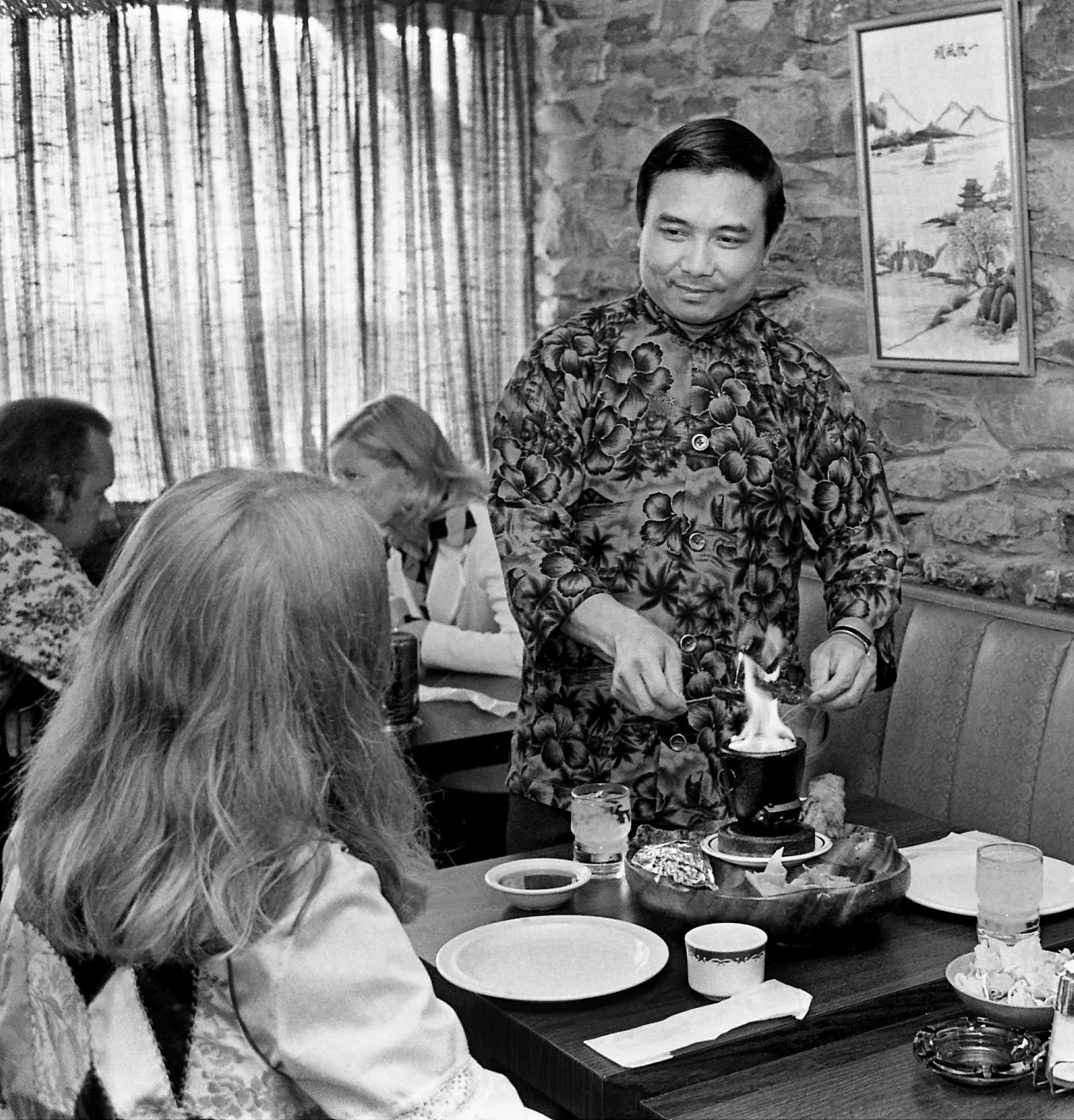
While Henry was building a Nashville career, the family had already moved north. In 1967 Henry and Tak relocated to Bowling Green. Their oldest son, Richard, had arrived in Morgantown the year before, recruited by a man named Richard Moore to open a badly-needed medical practice. Tak went to work at the clinic, greeting patients at Wan’s Medical Clinic by day. Henry kept commuting to Nashville.
For seven years Bowling Green knew Tak Wan as the friendly face at her son’s clinic. Henry was more or less a Nashville chef who happened to live in Kentucky.
That changed on a Tuesday morning in January 1974 when the Bowling Green Daily News printed a small headline: Chinese restaurant planned here. The Dixie Cafe on the Main Street side of Fountain Square had been purchased by a Nashville chef. The Dixie, which had had been open for more than fifty years, closed in May 1973. By March 1, 1974 it would be the House of Wan.
410 East Main
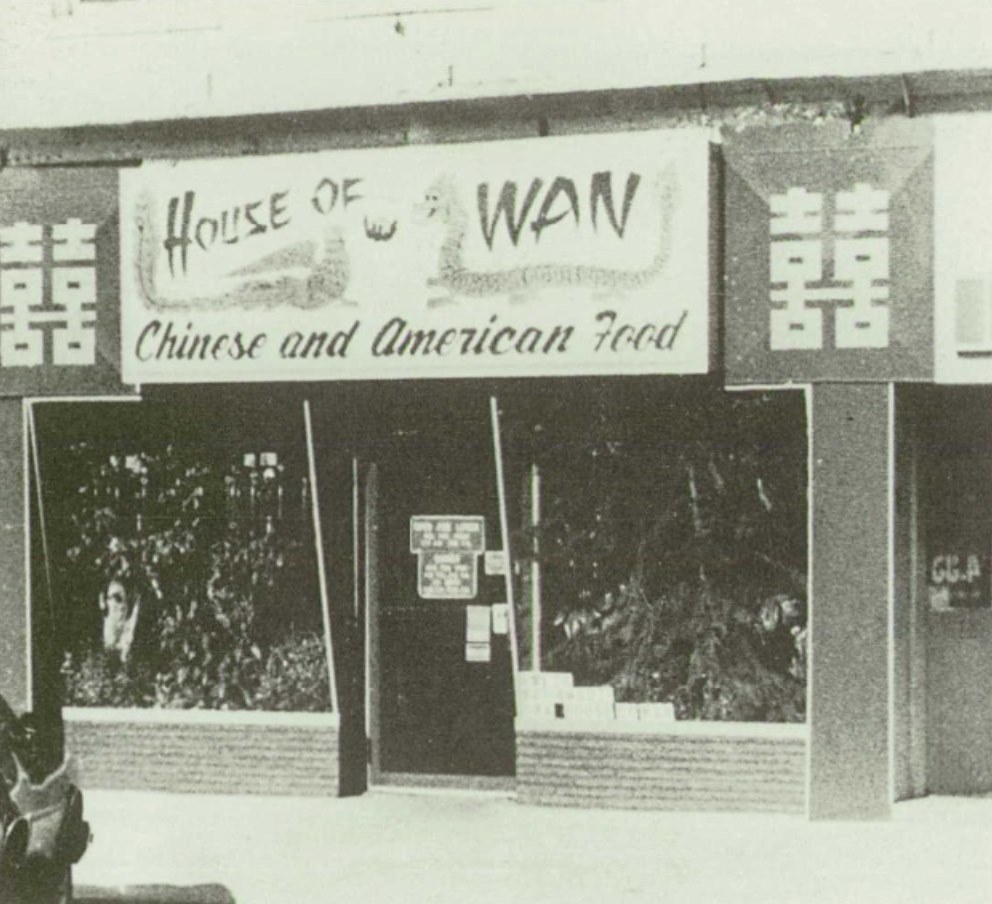
House of Wan opened in the spring of 1974 in the address that had been the Dixie Cafe for fifty years before it was anything else, on the Fountain Square side of East Main, in a building that today houses the Cliffs of Moher Irish Pub. Henry painted the sign himself, or had it painted and it read House of Wan, Chinese and American Food, and that was the announcement. A Cantonese chef who had worked his way through Los Angeles, Indianapolis and Nashville had arrived in Bowling Green with a building, a wife, two grown sons and the recipes he had spent four decades collecting. The early years were not quiet ones.
On a Saturday afternoon in June of 1975, eighteen months after opening the restaurant, a fryer in the kitchen caught fire. The flames crawled up an exhaust vent into the second floor, where a man named Mr. Chai ran a karate and kung fu school above Morris Jewelry next door, and the smoke ruined a great deal of what the jeweler kept on the ground floor. The Bowling Green Fire Department logged the alarm at 5:37 in the afternoon. Four units came. The blaze was contained in thirty minutes but the firemen stayed for over an hour, working from the front of the building and from the rear, while city police closed East Main and College Streets to traffic. Nobody was hurt. The Wans did what people who have already survived two wars tend to do when there’s a restaurant fire: they rebuilt and kept going.
The karate school upstairs is part of the story, too, because of who taught there. Two of the instructors at Chai’s School of Karate in those years were a Bowling Green man named Tom Pardue and his colleague, Wayne Gist. They were the ones who helped Tak and Henry move a heavy, old Chinese stove into the new restaurant one night when the Wans needed extra hands. That night turned into a friendship and the friendship turned into Tak telling Tom and Wayne stories. The one they remembered all their lives was about her father, the general, fighting with a sword on horseback. Try to picture that. Two American karate instructors at the back of a Chinese restaurant on Fountain Square in Bowling Green, Kentucky, in the middle of the 1970s, listening to a woman in her sixties describe her father charging into combat in southern China before either of their grandparents had been born. That was the kind of room Tak made wherever she went.
The friendship made another kind of full circle a few years later. Henry hired a cook for the kitchen named Jack Man Louie and what Henry probably knew but Bowling Green did not yet was that Louie was a kung fu master in his own right. Tom and Wayne, the karate instructors who had moved the stove, ended up training under the new cook at the restaurant they had helped build. Louie taught them for as long as he was in Kentucky. When he left Bowling Green, he left to take the title of master of all kung fu in Philadelphia’s Chinatown, which is not a thing most cooks in most small-town restaurants get offered. Before he went, House of Wan threw him a send-off at its Chinese New Year celebration, and Louie performed a Lion Dance and kung fu exhibition for the customers. The newspaper ad that ran the week of the celebration called him a master in the arts of kung fu. That ad undersold him.
Two Locations and Henry at the Karaoke
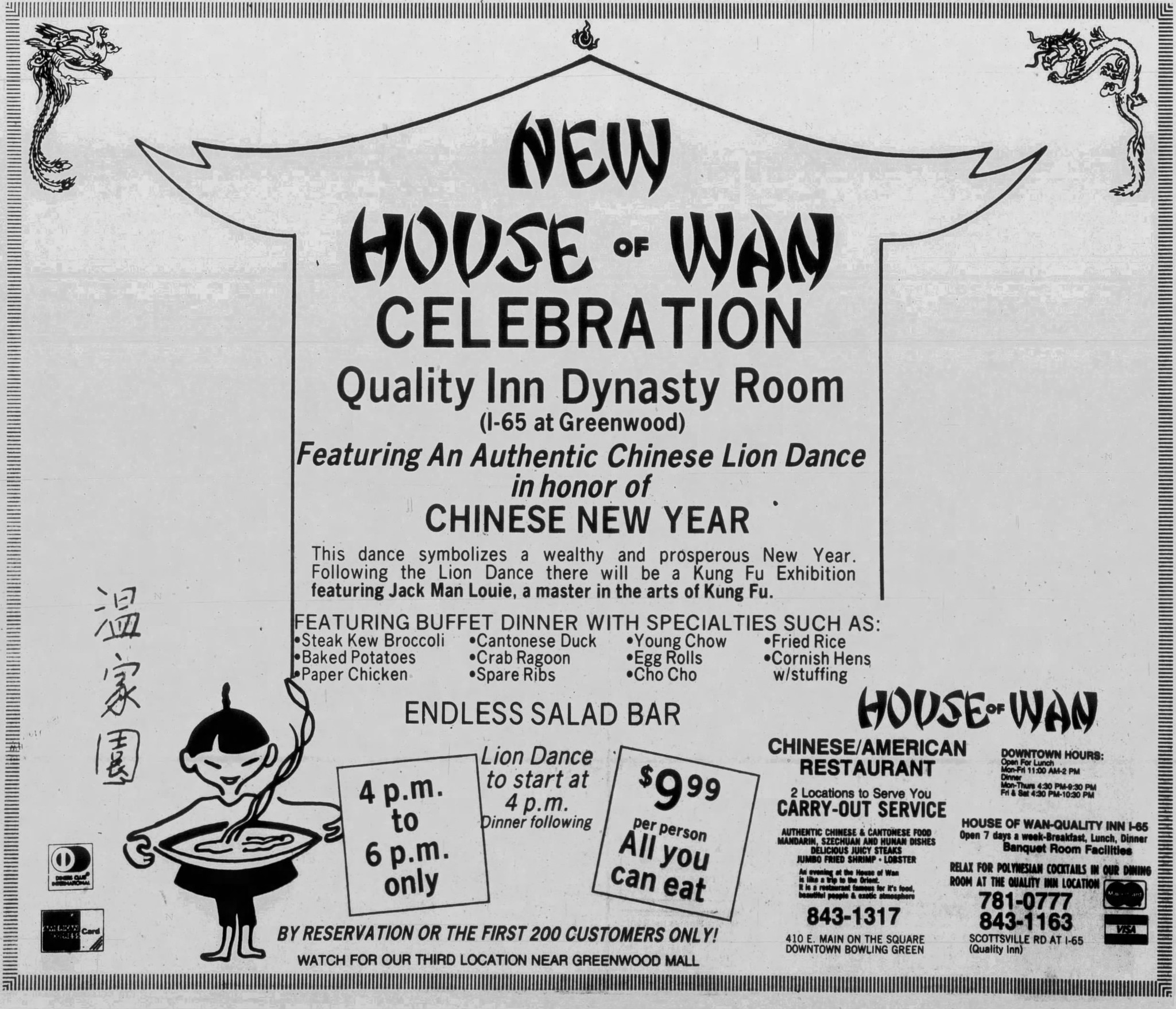
By the early 1980s, House of Wan was a two-restaurant operation. The original on Fountain Square was now House of Wan #1, the downtown lunch counter where the plate lunch ran the show Monday through Saturday. House of Wan #2 had opened across town at the Quality Inn off Interstate 65 at Exit 22, the same exit Bowling Green now knows for having two Waffle Houses and an IHOP within sight of each other. The Quality Inn location served a Sunday buffet for $4.99 a plate and ran what the ads called the Dynasty Room. The menu by then had stretched well past Cantonese into Hunan, Mandarin, and Szechuan, which in 1980s Kentucky was the kind of range you could only get if your chef had cooked his way through three other American cities first. There was talk of a third location going in near Greenwood Mall. Whether that one ever opened, I cannot find a clean answer.
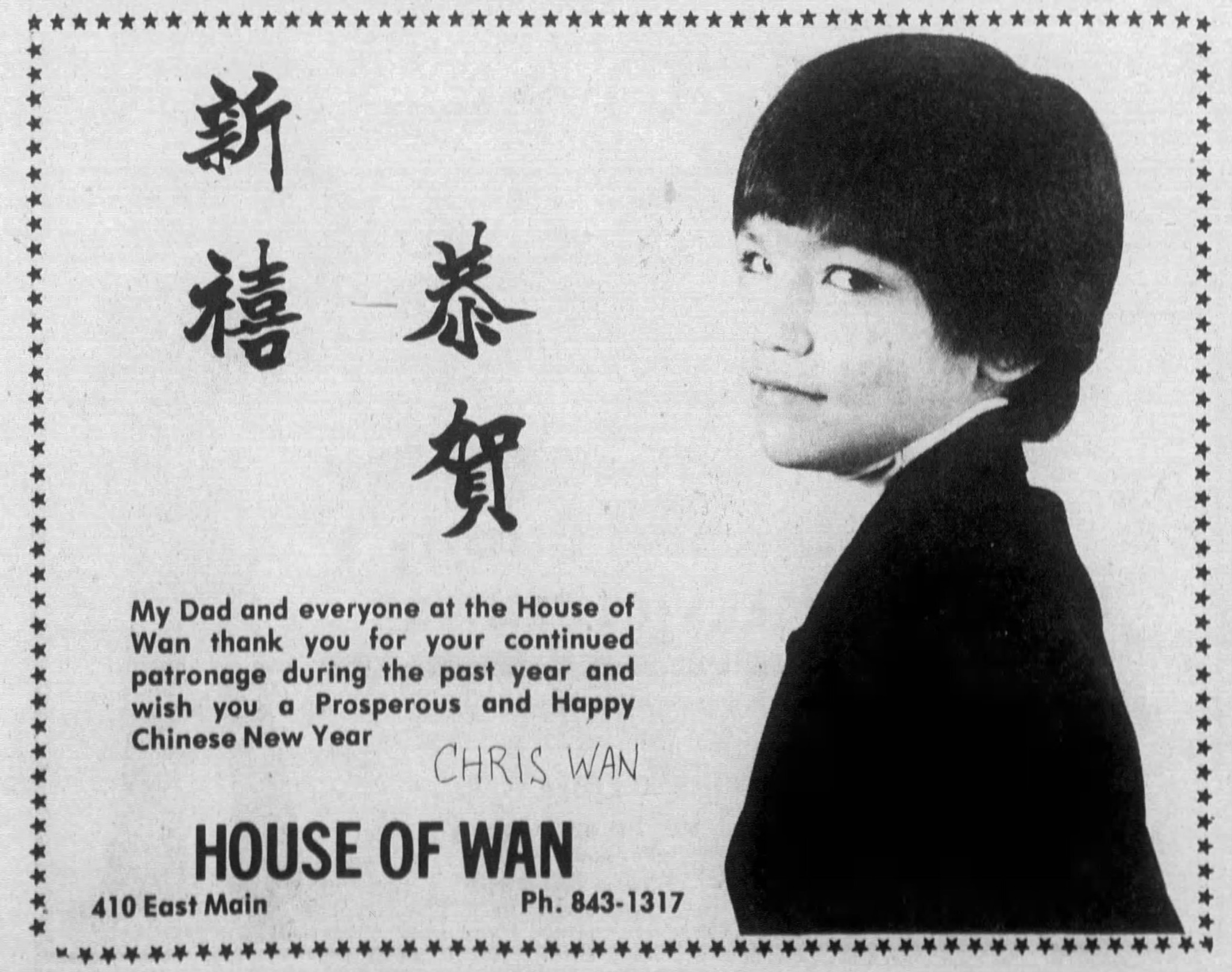
Henry and Tak became naturalized American citizens somewhere in this stretch of time. The line in Tak’s obituary about why she chose citizenship is the line I keep coming back to. She did it, the obituary said, because of her love of this country and the freedoms she found here, especially the freedom of expression and the ability to succeed if you work hard. Read that sentence again. That is not a generic immigrant story. That is a specific woman who watched the Japanese army occupy her hometown for seven years, then watched the Communist Party run her family out of the country, before crossing an ocean and a continent to end up in Warren County, Kentucky, telling you what she made of it. The freedom of expression. The ability to succeed if you work hard. A general’s daughter said that.
What everyone in town who actually knew them remembers, more than the food on the buffet and more than the sign over the door, was who Henry and Tak were when you walked in. Tak was always smiling. She greeted you at the medical clinic in Morgantown in the morning and she greeted you at the restaurant in Bowling Green at night and either way you got the same Tak. She loved music. She loved dancing. She played the piano. Henry was quieter in public but Henry had karaoke. The line that Bowling Green’s Mellow Matt Pfefferkorn passed down about Henry, the line that more than one person who knew the family will tell you if you ask, is that the best of him came out at the microphone. The best was when he’d sing karaoke. That is Henry Wan. A man who had opened restaurants in four American cities, who had survived two of the largest wars of the twentieth century before he was forty, who had buried friends and built a family and crossed a planet, and who would still, after the dinner rush and the dishes and the lock on the door, pick up the microphone and sing.
The China and Endings
By December 1990 the 410 East Main location was operating under a new name. The Bowling Green Daily News carried an ad for The China at the same address, with the words ‘Formerly House of Wan’ beneath the new logo. Whether the Wan family rebranded or sold the location, we couldn’t verify. Henry was still alive and would be for another three years.
Henry passed away on February 3, 1994 at the age of 94. He and Tak had been married 58 years.
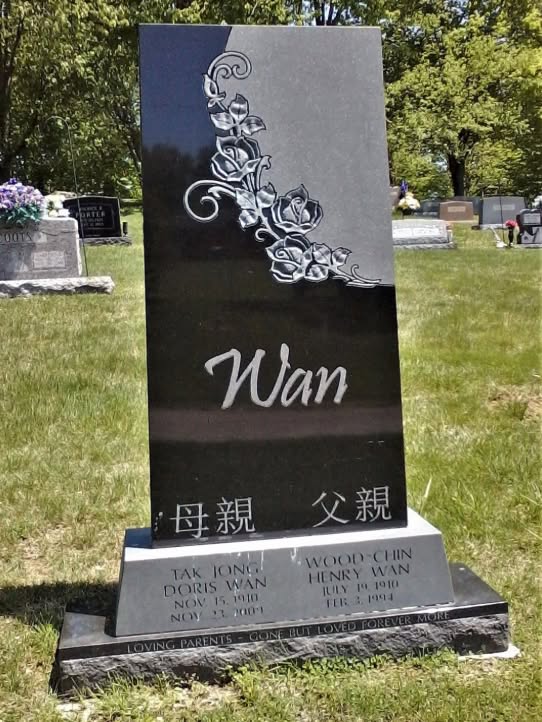
Tak lived on for another fifteen years. She kept smiling. She kept greeting people. She traveled the world, visiting almost every country she could, but the obituary said her heart was always with Kentucky and the people she loved here. She passed on November 23, 2009 at Commonwealth Regional Specialty Hospital, eight days after her ninety-ninth birthday. Her funeral was at First Baptist Church in Morgantown. She is buried next to Henry at Riverview Cemetery in Morgantown, under a black granite headstone with the word Wan in cursive English on the front and 母親 and 父親 (mother and father) inscribed below. The base reads: Loving Parents, Gone But Loved Forever More.
The Wan habit of showing up didn’t end with Henry and Tak. Their oldest son, Richard, who arrived in Morgantown in 1966 and practiced family medicine in Butler County for forty-eight years before retiring on January 1, 2014, kept the same posture. Every December for years, Dr. Wan and his wife Cindy hosted a Christmas Open House at their Morgantown home on Sunset Loop. The price of admission was a $2 donation to the Warren County Humane Society. Guests were asked to bring combs, brushes, towels, and metal spoons because the shelter needed them. The lights ran from dusk to ten at night. People drove through the circle drive whether they came in or not.
Why We Tell These Stories
Bowling Green is a town that gets remembered, when it gets remembered, for the things it produces. Corvettes. Country music sessions. Western Kentucky football. What we don’t talk about enough is the people who came here from somewhere else and decided this was the place. Henry Wan ran restaurants in four cities and chose Bowling Green. Tak Jong Wan was a Chinese General’s daughter who learned to make this town her home. Their son became Butler County’s doctor for nearly half a century. Their grandchildren are scattered now from Bowling Green to Omaha and to Menlo Park, but the family they became part of is still here.
We share this story so we don’t lose it. So the next family that arrives in Bowling Green from somewhere far away knows they are not the first. They will not be the last.
This is the first installment of Threads of Bowling Green, a Buy Local Bowling Green series about the families and individuals who came to this town from somewhere else and stayed long enough to leave a mark. If you know one we should write about next, tell us. If you have stories or photos or corrections about this one, tell us those too.
Editor’s note: You’ll see em dashes in this story and they’re added by me, a real human, not an AI chat bot.