

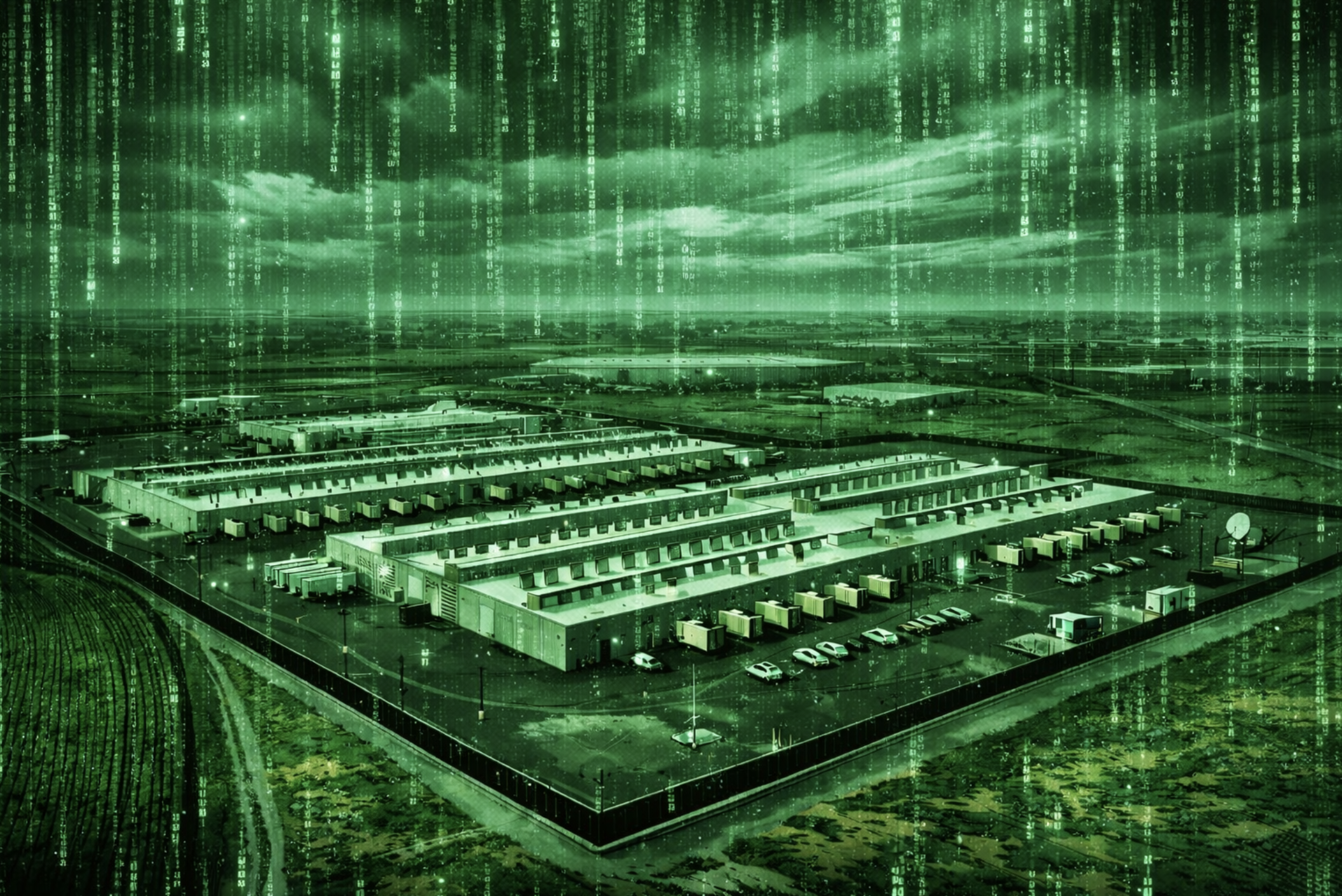

Drive the backroads of Kentucky long enough and you start to notice a quiet shift. Fields once measured in acres are now measured in gigawatts. Conversations that used to center on factories and distribution hubs now circle a different kind of tenant. The data center.
No smokestacks. No parking lots full of second shift workers. Just long, low buildings humming with machines that store the modern world.
This is not speculation. It is already happening across the Commonwealth.
In Louisville, a survey reported by Louisville Public Media found a vast majority of residents oppose building new data centers, many pointing to worries about water use, pollution, and the possibility of higher utility costs.
In Franklin, residents pushed back on a massive proposal over electrical demand, environmental concerns, and the realities of building on karst terrain.
Mercer County residents have organized opposition ahead of public meetings, raising concerns about farmland and long term community impact.
Meanwhile, a former aluminum plant in western Kentucky is being redeveloped into a high performance computing campus, proof that these projects are no longer theoretical.
Paducah has even been described as ground zero for America’s next AI gamble.
Taken together, the message is simple. Kentucky is being recruited.
Bowling Green should assume the phone will ring eventually.
What is the Promise of Data Centers?
Every generation has its version of progress. Rail lines. Interstates. Industrial parks. Now it is digital infrastructure.
On the surface, the pitch feels familiar. Investment. Growth. Tax revenue. Temporary construction jobs that ripple through hotels and restaurants.
The Kentucky League of Cities notes that communities must consider zoning, water usage, emergency services, and especially energy demand when evaluating these facilities.
Those are not abstract planning terms. They are the bones of a town.
There will be jobs. But what kind of jobs?
When a large project is announced, people picture steady work and new neighbors coaching Little League.
Data centers are built differently.
Construction can bring a surge of employment for a season. Then the building settles into something closer to a utility than a workplace. Modern facilities rely heavily on automation and often operate with relatively small permanent staffs.
Important infrastructure does not always mean widespread employment.
That distinction matters when incentives enter the conversation.
What really matters to those not interested in the actual projects is their electric bill and how it will be affected.
There is a quieter question moving through communities now. It is less emotional and more arithmetic.
Who pays for the power?
A Bloomberg analysis found wholesale electricity prices were as much as 267 percent higher than five years earlier in regions experiencing heavy data center growth, with costs flowing through to customers.
The mechanism is not complicated. Massive energy user arrives. Infrastructure expands. Bills adjust.
None of this guarantees Bowling Green will face the same outcome. Power systems are regional, though, and demand rarely stays contained within a county line.
The question worth asking early is whether ratepayers would be protected before any agreement is signed.
What happens to these facilities in the long term? Building projects happen and if they go unfulfilled, what happens?
Electricity is only part of the equation. Cooling systems can require significant water depending on design. Land use shapes how a community sees itself.
Projects placed on existing industrial sites tend to raise fewer alarms. When farmland disappears or rural edges begin to industrialize, resistance grows quickly. Not from fear of technology, but from a sense that landscapes, once altered, seldom return. Just look up I-65 south of Elizabethtown for the battery plant project.
We’re not here to be anti-data center or pro data center. We’re here to be measured and see the nuance.
Data centers are not villains. They are also not saviors. They are physical expressions of a digital age that demands constant storage and instant retrieval.
The challenge for any city is balance.
Growth is good. Smart growth is better.
Transparency matters. So does patience. Deals signed in urgency tend to be remembered longer than the excitement that produced them.
Before the first rendering appears or the first promise is repeated, Bowling Green would do well to focus on a handful of steady questions.
Will infrastructure costs fall on households?
Is the site right for something so permanent?
Are incentives matched by measurable public benefit?
Are the details known before approval rather than clarified afterward?
Progress rarely announces its full price at the beginning.
The servers are coming somewhere. Perhaps nearby. Perhaps soon.
A community does not have to reject the future to insist on understanding it.
It simply has to look clearly at what is being offered, what is being asked in return, and what kind of place it hopes to remain once the quiet buildings start to hum.