

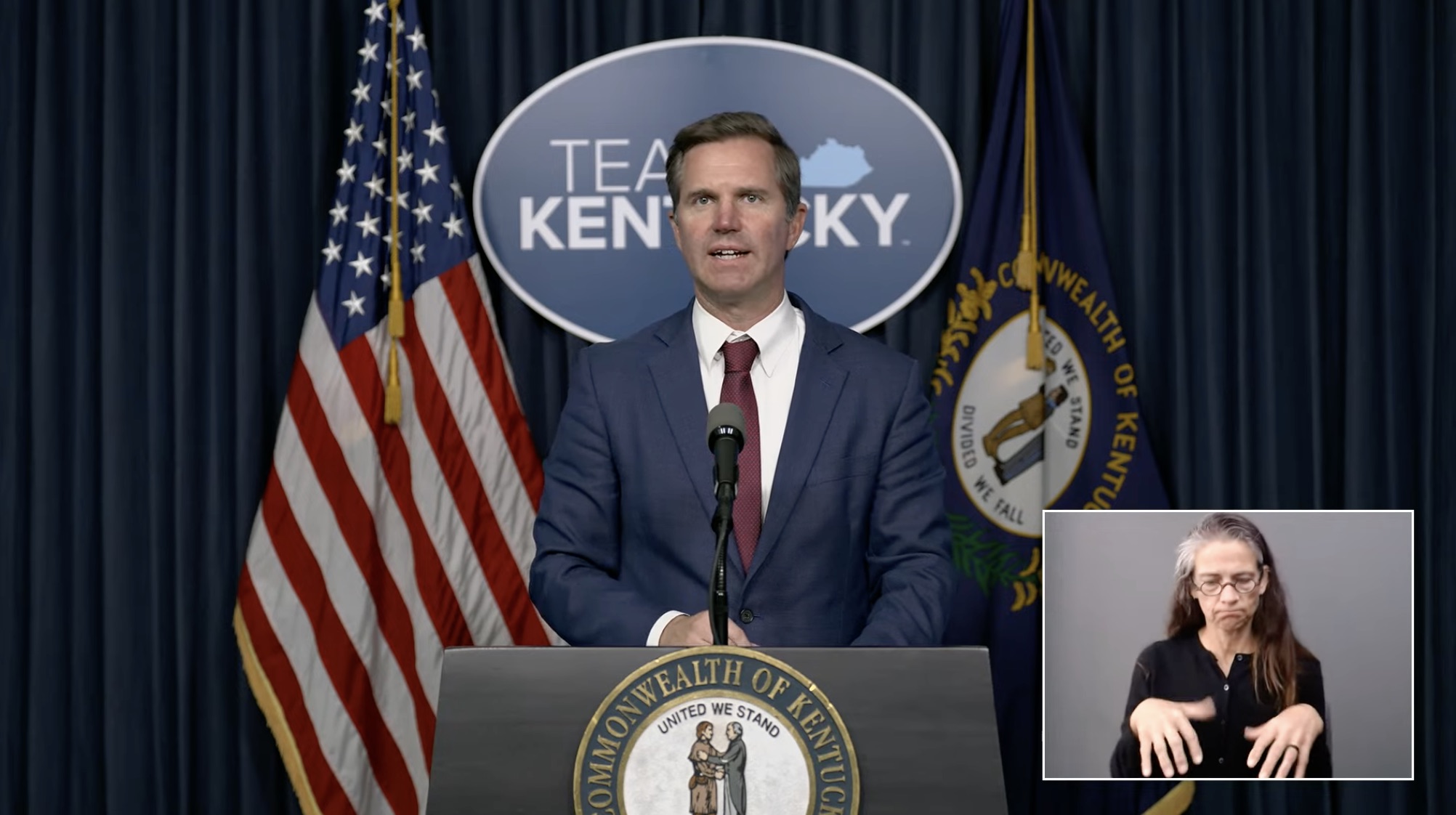

On Tuesday, Governor Andy Beshear announced that more than $250 million in medical debt for more than 130,000 Kentuckians would be relieved as part of a new effort with Undue Medical Debt, a non-profit formerly known as RIP Medical Debt.
“Medical debt isn’t a choice – it’s what people are faced with after a serious accident, cancer diagnosis and more. Relieving this debt is the right thing to do to help Kentuckians who are overwhelmed by these extreme costs, which can cripple families for years, if not a lifetime,” said the governor. “That’s especially true when medical debt results in bad credit, which can prevent families from securing the American Dream of owning a home. Unpredictable challenges shouldn’t be a barrier for a better future, and today we’re taking steps to help make sure that isn’t the case.”
The Commonwealth is contributing $2.5 million as part of the limited relief program.
In a press release from Beshear’s office about the effort:
There is no application process for the Team Kentucky Medical Debt Relief Program, and debt relief cannot be requested. Eligible Kentuckians will receive an official medical debt relief letter from Team Kentucky and Undue Medical Debt. The letter will notify recipients of what debts have been erased and from which creditors. No further action is required of Kentuckians who receive a letter; however, it is recommended that the letter is kept for proof of debt erasure.
But there’s already a problem or two and more than 100,000 Kentuckians are potentially left with confusion and frustration. Not just because you cannot apply for the program or because a controversial, little known non-profit organization is doing credit checks on Kentuckians without their consent. The root of the problem: The governor’s office has provided three separate numbers that make it difficult to really verify what’s accurate.
In his Executive Order (PDF Link), Beshear claims this program will aid 130,000 Kentuckians. On the state’s program website, the same number is provided but says only the first 46,000 will receive support at first. No big deal, right? Unfortunately, this is all compounded by yet another claim during his press conference (this link loads a YouTube video) that only 20,000 Kentuckians will benefit. Who wouldn’t love to see all medical debt erased for those who need it? We certainly would love to see it disappear so lives can stop being destroyed. We would also love it if elected officials were more focused and direct so important efforts like this didn’t feel like a political game that leaves vulnerable people confused. We reached out to multiple sources in the governor’s office for clarification and received different answers from all three, which we’ve documented above.
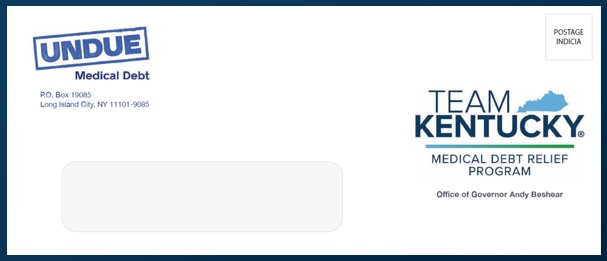 Medical debt relief envelope
There is even more reason to be concerned about proper use of state taxpayer dollars. You may recall this is the same organization that got into some major hot water in Lexington last year after it was revealed the organization took more than third of its funds for overhead costs and not actual relief of medical debt. Only time will tell how much of these $2.5 million will disappear as overhead costs. We reached out for direct comment but received no response.
According to Kentucky Voices for Health and the Urban Institute, approximately 18.1% of Kentuckians have medical debt in collection on their credit reports and the entire state ranks 10th-highest in the nation for residents burdened by medical debt.
Kentucky ranks tenth in the nation for residents with medical debt
Stacker dug deep into the Urban Institute data to discern that while 30.2% of the people in Warren County have debt in collections, just 16.56% have medical debt in collections. That still means more than 18,000 people locally are directly impacted — no small number — and it’s why we’re interested. You or someone you know is one of those people. And to really hammer this home, studies like this one from the National Bureau of Economic Research and this one from the Consumer Financial Protection Bureau prove medical debts have little to no value as an indicator of whether or not an American will repay a debt.
Melissa Henry, a Kentuckian directly impacted, joined the governor and Undue Medical Debt at the press conference. “No one chooses to get sick, and there is no shopping around to compare prices. Like thousands of other Kentuckians, I was opted into medical debt by illness and accident. Trying to focus on getting better, I had to choose between keeping the lights on and food in the fridge or trying to pay down the debt. It was a painful distraction keeping me from focusing on recovery. That debt followed me and affected my credit for years. It made it harder to buy a car, qualify for a mortgage; every loan I got had a higher interest rate. I delayed going back to the doctor even when I should have,” Henry said. “Undue Medical Debt erasing my debt gave me hope. Hope that there are people and companies that care more about human lives than money. Hope that someday no one will have to make an impossible choice because they can’t afford medical care.”
Those who qualify for the program will need to be a resident of Kentucky and will need to have a medical debt that’s equal to 5% of their annual income. Those who earn at or below 400% of the federal poverty level, roughly $100,000 annually for a family of three, will also qualify.